Two kinds of property
Blanket policy. A fixed criteria set runs the decision. If your record trips a rule, the answer is no, and no letter, income level, or explanation changes it. There is no human step to appeal to.
Case-by-case review. A person reads the file. Offense class, age, disposition, income, and what has changed since all enter the decision. This is what “individualized assessment” means in practice.
Both exist in Dallas. Knowing which one you are applying to before you pay a $50 to $75 non-refundable application fee is the difference between a strategy and a guess, and it is the first filter background-friendly locating applies.

Where judgment survives
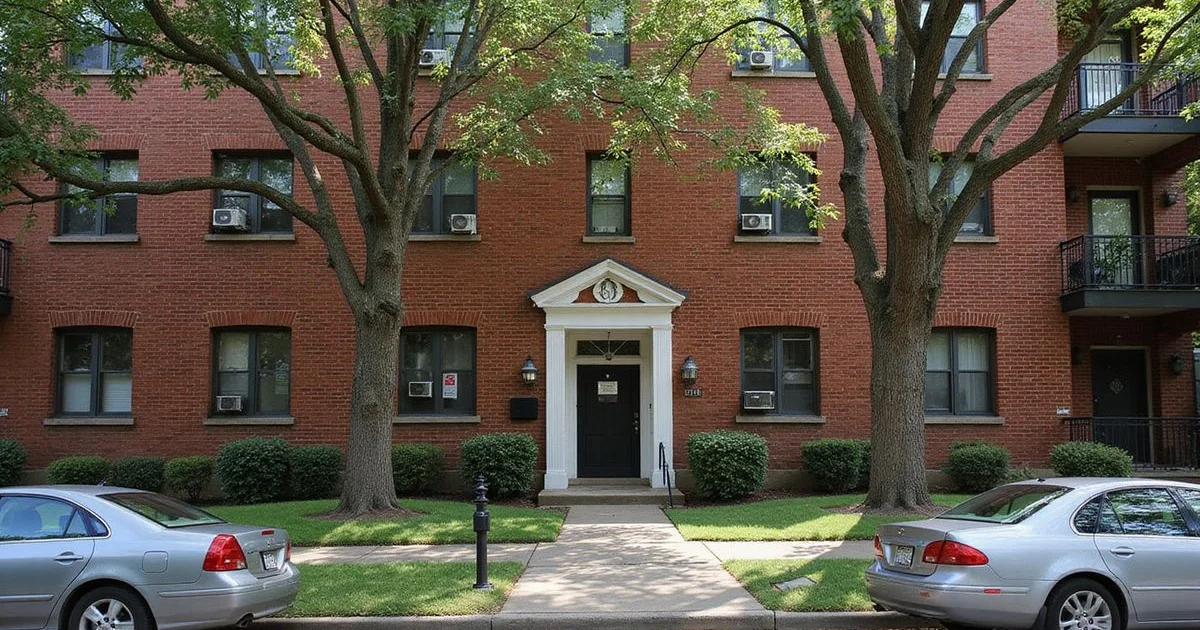
Older stock, mostly.
Roughly 19% of Dallas rentals were built between 1980 and 1989 and 18% between 1970 and 1979. That is a single-source figure and worth re-verifying against Census ACS, but the pattern matches what we see: buildings with an on-site decision-maker rather than a centralized automated criteria gate.
Smaller operators and independently managed properties tend the same way. Large institutional portfolios more often run standardized criteria across every asset, which is efficient for them and inflexible for you.
That is a description of operating models, not a judgment about the buildings. Some of the best-run properties in Dallas run strict criteria, and some poorly run ones review individually.
How we identify them
We research properties and maintain our own database: availability, pricing, concessions, fee stacks, and screening criteria, each record stamped with the date it was verified.
Which management companies review individually, what they ask for when they do, and what they have said about specific situations is part of that database. It is built from our own property relationships and confirmed rather than assumed.
That is the canonical attribution. We do not cite a source we cannot produce, and we do not republish listing-site data.
Criteria change
A property that reviewed individually last quarter may have adopted a standardized policy this quarter. That is why every record carries a date, and why we re-verify before you drive rather than relying on what we knew in March.
What a case-by-case reviewer asks for
Where a property reviews individually, it usually wants some combination of:
- The offense class and the year
- The disposition — dismissed, deferred, convicted
- Documentation, where you have it
- A short factual letter of explanation
- Income documentation stronger than the minimum
- Sometimes a larger deposit or a guarantor as a condition
A letter helps here and does nothing at a blanket-policy property. That asymmetry is the entire practical reason to know which type you are dealing with.
What this does not mean
It does not mean approval. A property that reviews case by case is a property that will look, not a property that will say yes.
We describe what properties require. We never promise approval, and neither should anyone else. Also worth saying plainly: HUD’s 2016 guidance on criminal-history screening exists because blanket exclusions carry disparate-impact exposure, not because any renter is entitled to a particular outcome.
Next step
Send the three things in what to send us: offense class, how long ago, and your gross monthly income.
We match that against tracked criteria and send back properties whose stated policies fit — with the review type, the income multiple, and the verification date attached. That is what background-friendly locating does.